Report on Community Day Event 23/5: Tech Trends and Practical Applications
Event Overview
On May 23rd, I had the opportunity to attend the AWS Community Day event. It wasn’t just a standard technical seminar; it was an inspiring celebration of technology. As an intern, this event helped me connect many dots: from network infrastructure optimization and personal knowledge management to practical applications of AI and Multi-agent systems in modern enterprises.
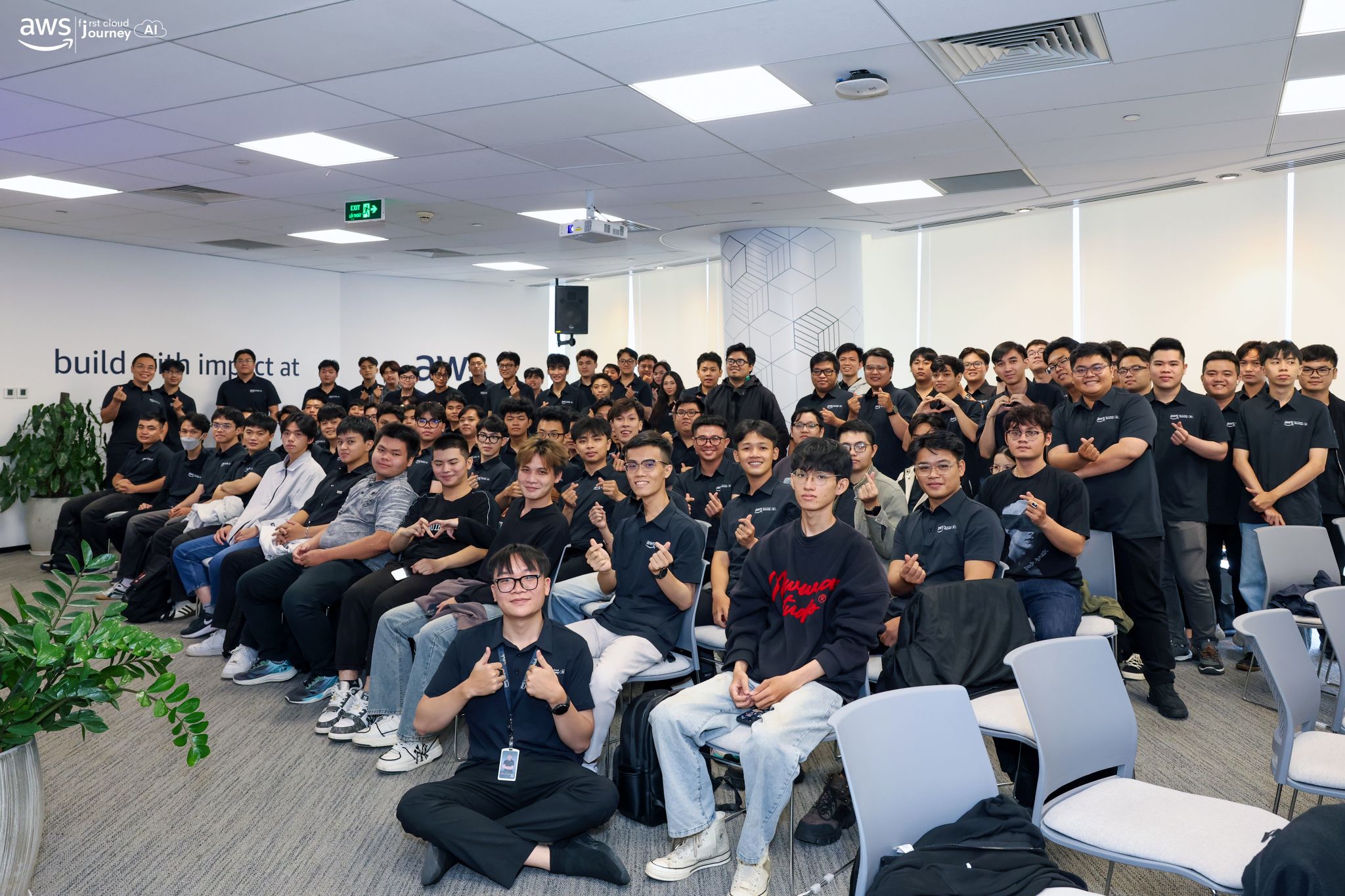
Here are my key takeaways and lessons learned from the speakers at the event.
Key Highlights & Lessons Learned
1. Anh Tinh - Build second brain
The event kicked off with a talk by Anh Tinh on building a “Second Brain”, which really resonated with me.
- The Problem: The speed of technology outpaces biological memory, easily leading to cognitive overload.
- The Solution: Build a structured external storage system (using Obsidian or Notion) with bi-directional linking.
- Personal Lesson: Instead of just bookmarking files passively, I need to create a “Personal Knowledge Graph” to quickly retrieve technical solutions and lessons from past projects. Mastering personal information management is the first step toward handling complex enterprise systems.
2. Hai Anh - Friendly AI Assistant with Amazon Quick
Hai Anh introduced smart AI assistants similar to Amazon Q (Friendly AI Assistant with Amazon Quick):
- Workflow Automation: Demonstrating how AI can automate repetitive daily tasks like code generation and document analysis.
- Practical Value: Integrating intelligent assistants into workflows accelerates engineering speed and optimizes team productivity.
3. Thinh - From Edge To Origin: CloudFront as Your Foundation
Thinh’s session, “From Edge To Origin: CloudFront as Your Foundation”, completely redefined how I view the CloudFront CDN service.
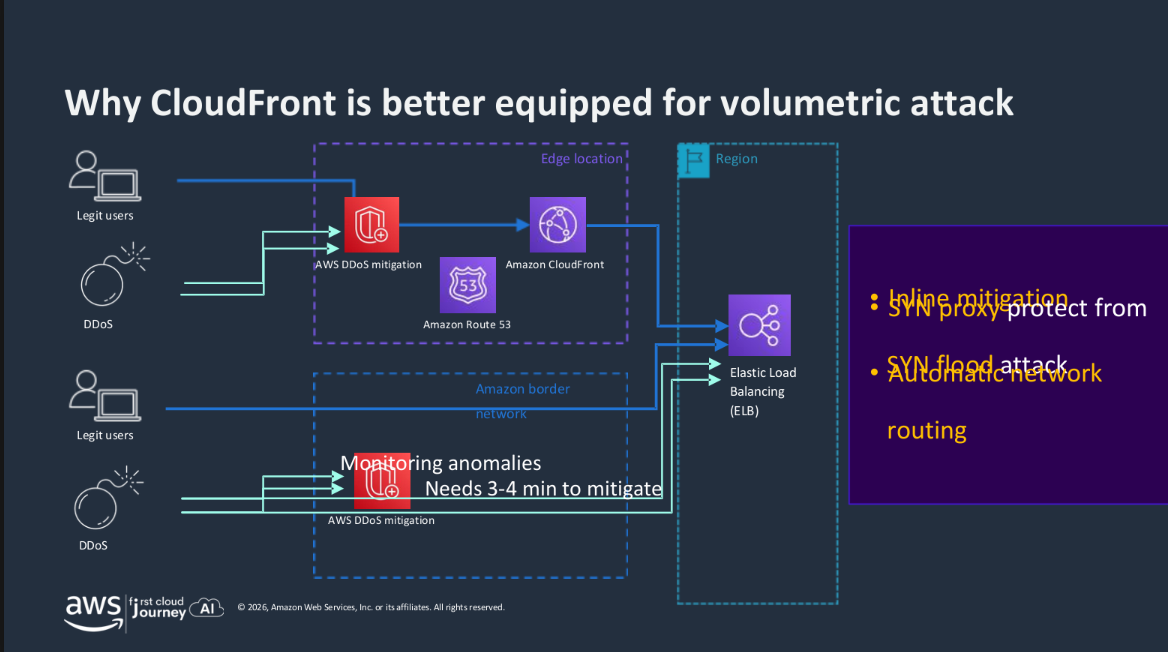
- More than just Caching: CloudFront serves as the first layer of defense and optimization (the foundation) for the entire application.
- Latency Optimization: Resolving and delivering content at Edge Locations closest to users minimizes round-trip times.
- Edge Security: Integrating AWS WAF and Shield at the edge blocks DDoS attacks and exploit attempts before they ever reach the origin server.
- Origin Shield: Protects the origin from spikes, maintaining system availability during traffic surges.
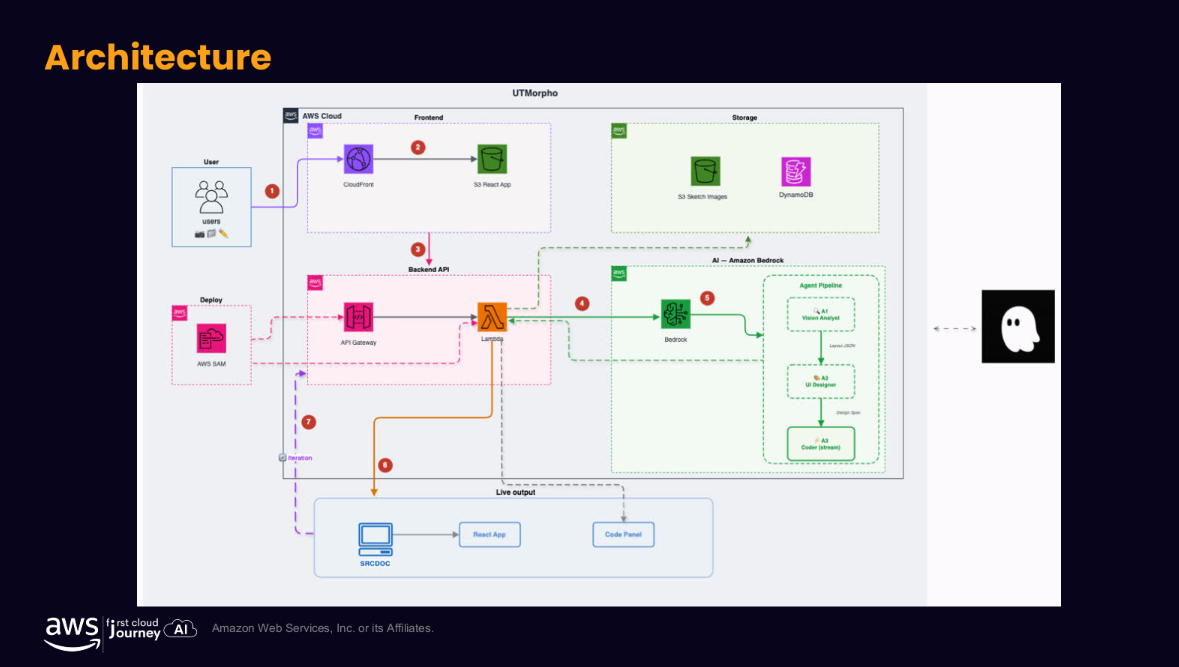
4. Team VIB - 36 hrs with LotusHacks – Building UTMorpho from Idea to Release
A practical case study on turning technology ideas into real-world solutions:
- UTMorpho Project: The team built UTMorpho—a flexible data and image transformation tool—in just 36 hours at the LotusHacks hackathon.
- Agile Lessons: Extreme agile project management under intense time pressure and leveraging existing APIs to build a quick MVP.
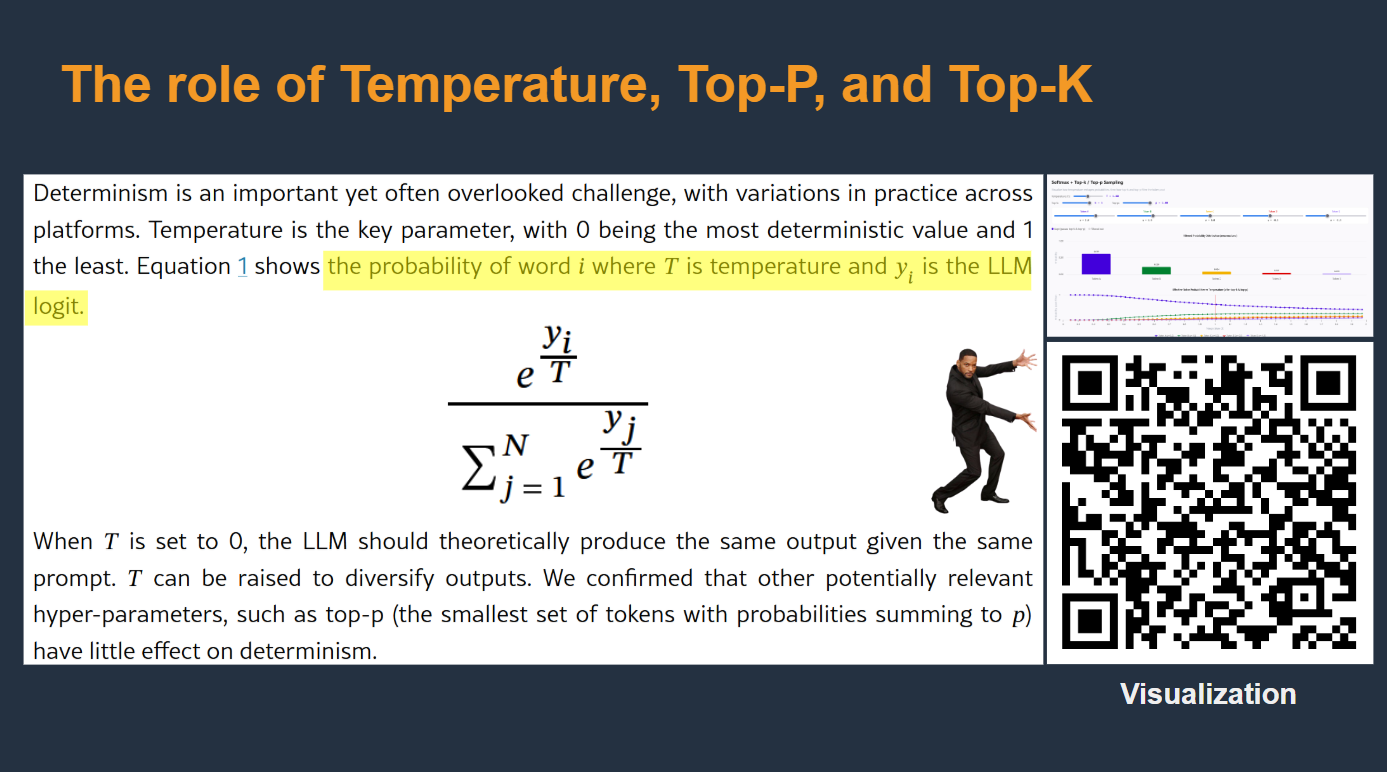
5. Dao Duc - Deep dive talk: How LLM actually works?
Dao Duc gave an in-depth technical talk on the inner workings of Large Language Models (LLMs):
- How LLMs Work: Dao Duc explained the core mechanisms of Transformers, Attention, Tokenization, and inference. Understanding this helps write better prompts (Prompt Engineering) and manage compute resources efficiently.
A quick comparison I compiled to distinguish the two aspects:
| Criteria | Understanding AI (Theory & Architecture) | Using AI (Practice & RAG/Agents) |
|---|---|---|
| Technical Focus | Transformer architecture, Attention mechanisms, and parameters. | Prompt Engineering, RAG (Retrieval-Augmented Generation). |
| Operational Goal | Understand how the model predicts next tokens for evaluation and tuning. | Integrate AI into workflows to process data and generate code. |
| Business Value | Assess model feasibility, safety, and limitations. | Accelerate product delivery (Time-to-market). |
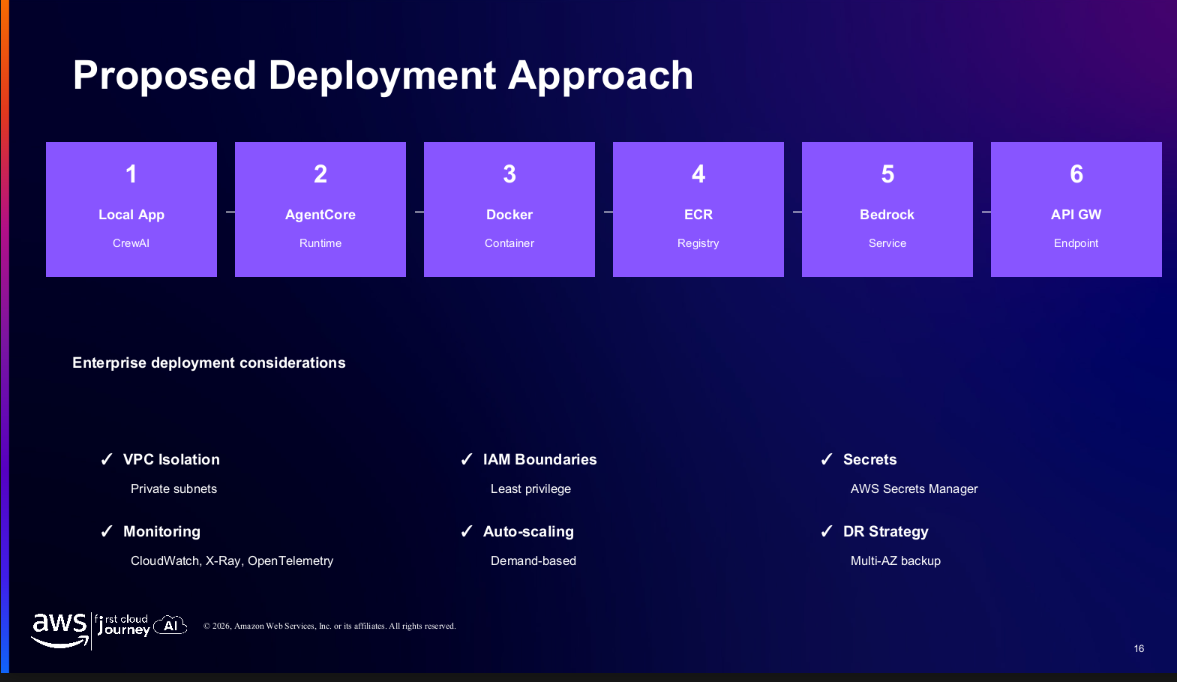
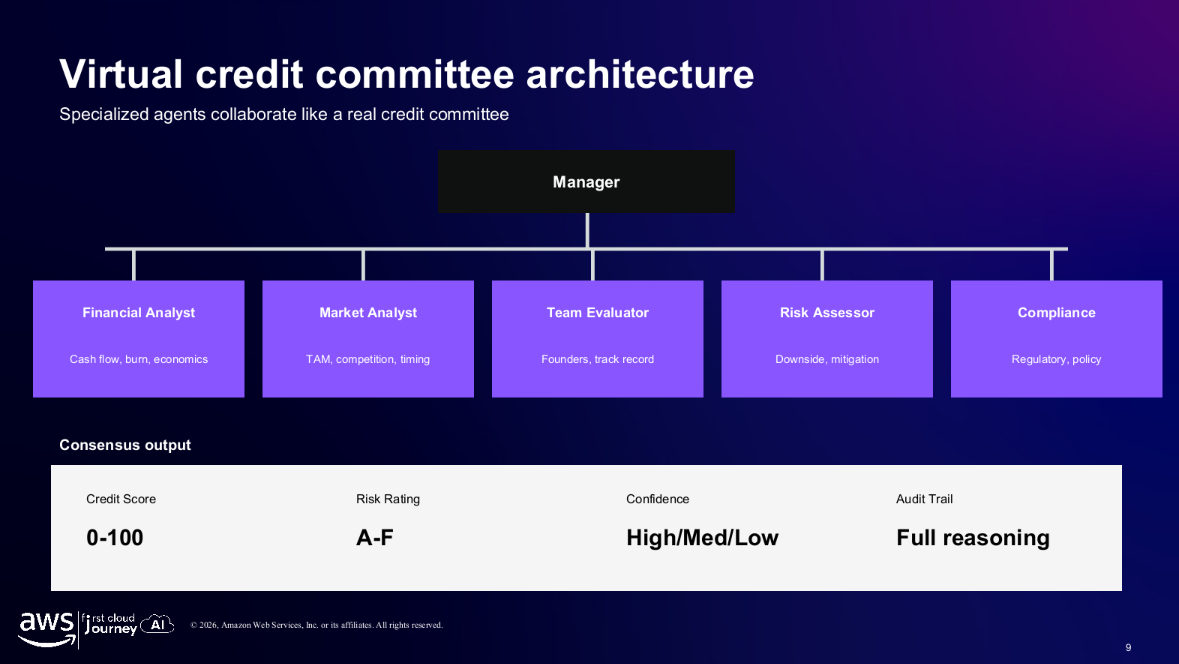
6. Cat Vy - Enterprise-Grade Multi-Agent System: The Case of Startup Credit Committee
Cat Vy presented a case study on deploying multi-agent systems at enterprise scale:
- Multi-Agent Systems in Credit Scoring: Instead of a single AI model, Vy introduced a system using multiple specialized agents (e.g., identity verification agent, risk analysis agent, and explainable AI agent - XAI).
- Enterprise Impact: Coordinating these agents ensures high financial accuracy, transparency, and compliance with strict banking/financial industry standards.
Personal Experience & Action Items for My Project
Attending AWS Community Day was a highly valuable experience. It gave me the chance to learn from top experts, connect with the community, and see the big picture of where the industry is going.
To apply these insights to my own studies and ongoing development projects (like the Rookwork project), I plan to focus on three actions:
- Build a Personal Knowledge Base: I will use Obsidian/Notion to document AWS configurations and troubleshooting steps encountered while developing Rookwork.
- Optimize Web Infrastructure with CloudFront: Configure CloudFront along with ACM SSL certificates and AWS WAF for the static frontend of Rookwork to ensure speed and edge security.
- Experiment with AI/Agent integrations: Explore building a mini-assistant or chatbot integrated within the task manager to automatically summarize issues or suggest assignee allocations.
Community Day gave me a lot of motivation. Mastering technology isn’t just about reading theory—it’s about building, executing, and delivering real products!